Particulate monitoring
PM2.5 Monitoring
Independent, research-grade PM2.5 monitoring for UK offices, schools and healthcare buildings — quantifying the fine particulate exposure that the WHO links to cognitive, cardiovascular and respiratory harm.
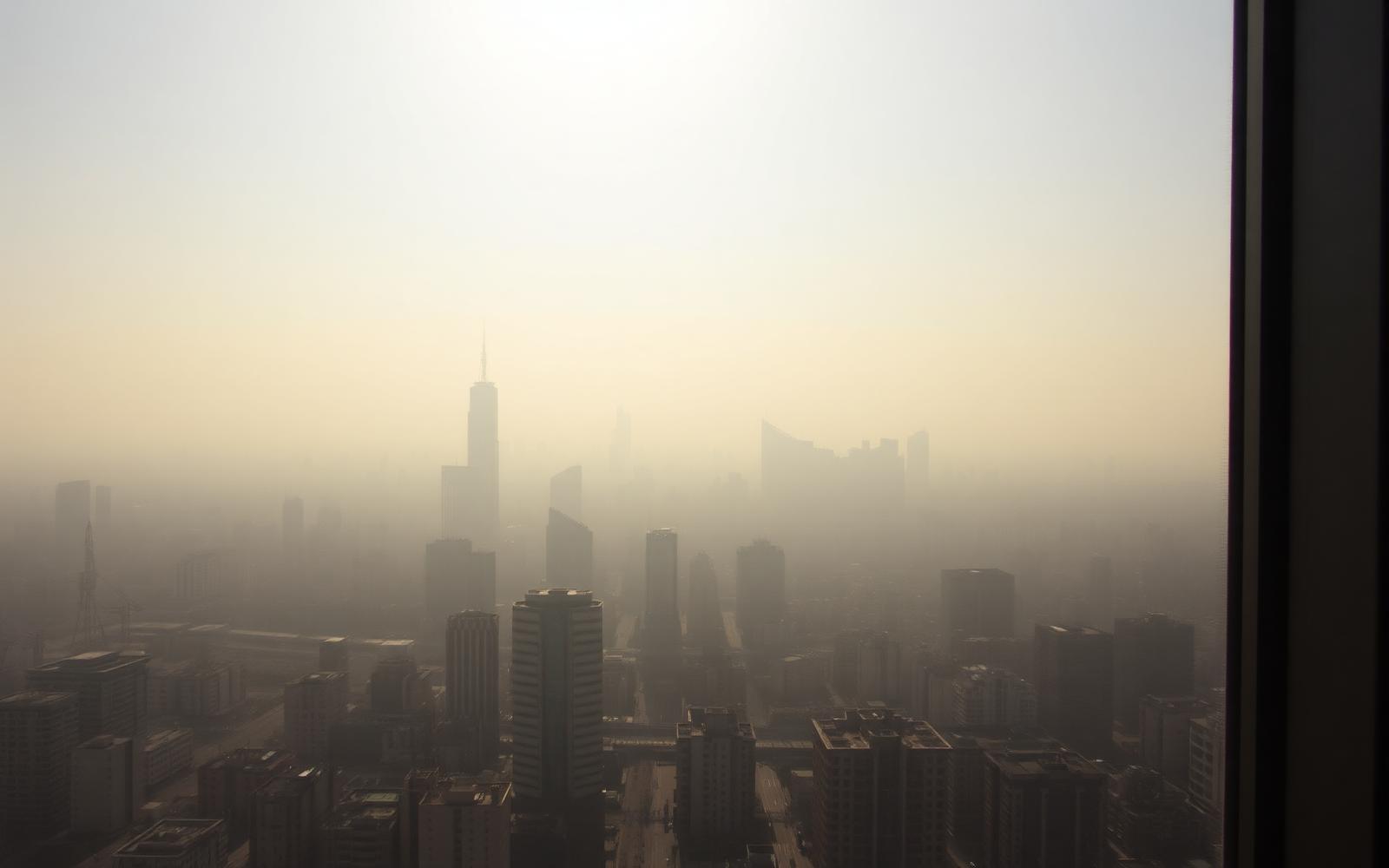
What PM2.5 is
PM2.5 monitoring quantifies the particles that get past the body's defences
PM2.5 refers to airborne particulate matter with an aerodynamic diameter of 2.5 micrometres or less. At that size, particles bypass the upper respiratory tract — the nose hairs and mucociliary escalator that filter larger debris — and deposit deep in the alveoli. The smallest fraction crosses into the bloodstream and reaches the heart, brain and other organs.
The WHO Global Air Quality Guideline was tightened in 2021 to reflect mounting evidence that long-term exposure to PM2.5 contributes to cardiovascular disease, stroke, type-2 diabetes, accelerated cognitive decline and several cancers. The annual mean guideline is now 5 µg/m³ — a level most UK urban offices never reach indoors without active filtration.
Indoor PM2.5 has two sources: outdoor air drawn in through the HVAC system or building envelope, and indoor activities (printers, cooking, candles, dry-sweeping, occupant movement re-suspending deposited dust). PM2.5 monitoring quantifies both and identifies which is dominant — the prerequisite for an effective remediation plan.
Methodology
A typical PM2.5 monitoring deployment
- 1
Stage 01
Outdoor reference
We establish an outdoor PM2.5 baseline immediately adjacent to the building's fresh-air intake using a co-located reference monitor for the full deployment period.
- 2
Stage 02
Indoor sensor placement
Optical particle counters deployed at breathing-zone height in affected and control zones, logging at 1-minute intervals for 5–10 working days.
- 3
Stage 03
Indoor/outdoor ratio analysis
I/O ratio < 0.3 indicates effective filtration; > 0.7 indicates poor envelope or filter performance; > 1.0 indicates dominant indoor sources.
- 4
Stage 04
Reporting & remediation
Written report with charted traces, WHO and WELL benchmarking, source attribution and ranked remediation: filter upgrade, envelope sealing, HEPA augmentation, source removal.
Guideline values
PM2.5 benchmarks for indoor environments
| Standard | Threshold (µg/m³) | Averaging period |
|---|---|---|
| WHO 2021 AQG | 5 | Annual mean |
| WHO 2021 AQG | 15 | 24-hour mean |
| WELL Building Standard | ≤ 12 | Sampling |
| UK PM2.5 Air Quality Objective | 20 | Annual mean (outdoor) |
| EU ambient air directive (2024) | 10 | Annual mean (outdoor) |

Why measure indoors
The outdoor air your office receives is rarely the air your occupants breathe
UK ambient air quality data is publicly available — but the concentration outside the front door is not the concentration in the breathing zone. Filter condition, AHU bypass, envelope leakage, internal sources and occupant behaviour all modify it. The only way to know what the workforce is actually exposed to is to measure indoors.
For a roadside office in central London or Manchester, indoor PM2.5 is dominated by traffic ingress. Filter upgrade to F7/MERV 13 typically reduces concentration by 60–70%. For a suburban office with new MDF furniture and a busy print room, internal sources may be dominant; the answer is source control plus HEPA augmentation rather than AHU work.
PM2.5 monitoring is part of every workplace SBS investigation, and a standalone service for organisations targeting WELL certification, BREEAM HEA02 credit or ISO 16000 compliance.
FAQ
PM2.5 monitoring — common questions
Concerned about indoor particulates?
Book a continuous PM2.5 monitoring deployment with WHO benchmarking and remediation guidance. Call 01322 555566.
Request PM2.5 monitoringRelated monitoring
Workplace IAQ
Investigate SBS