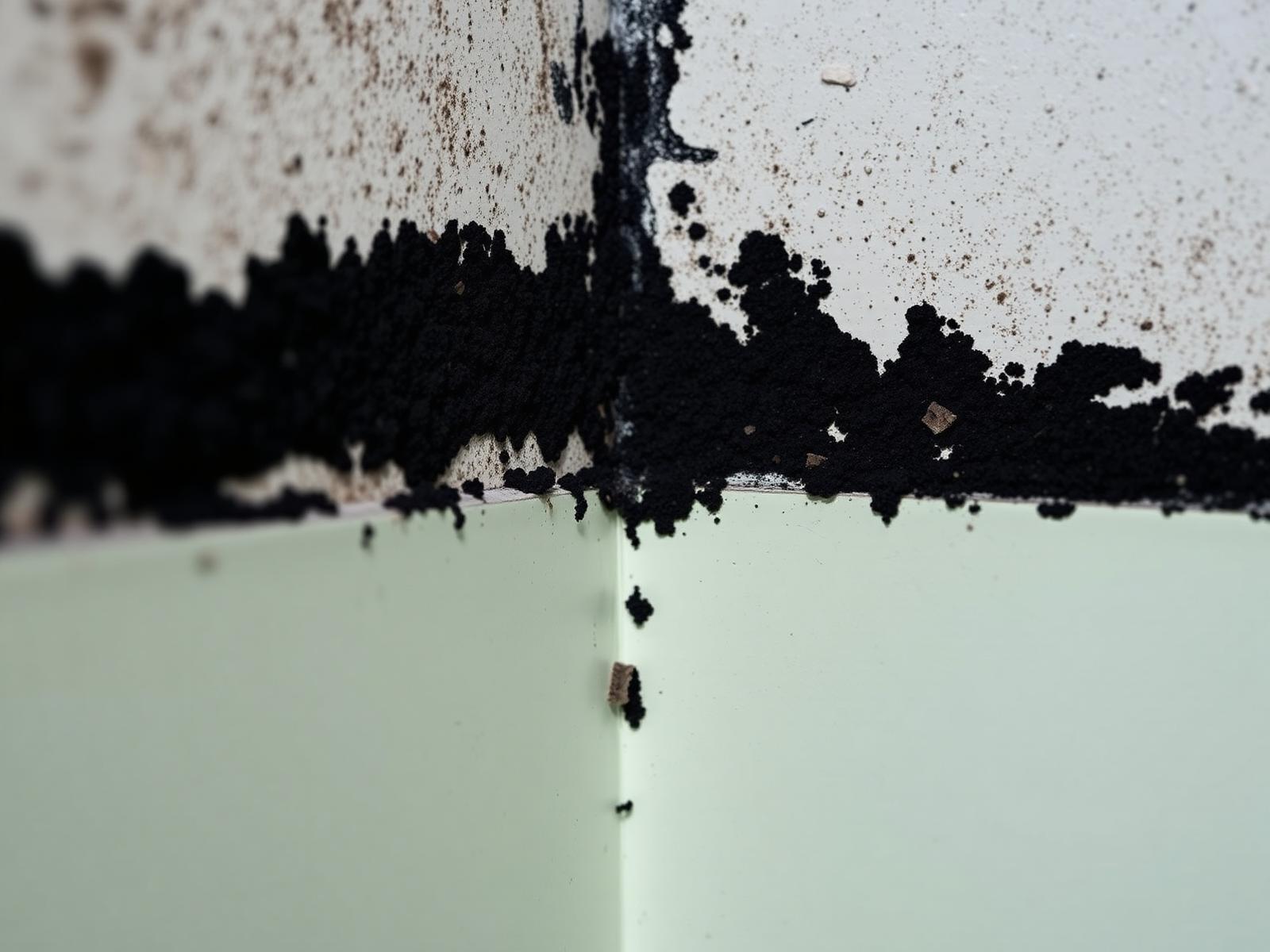
Mould and bacteria growing on damp materials release a family of small organic molecules — microbial VOCs — including geosmin and 2-methylisoborneol. The nose detects these at parts-per-trillion. By the time the smell is obvious, the colony is well established, often in places you can't see: insulation, suspended-ceiling voids, behind partition walls, inside AHU cooling coils, or in long-runs of dirty ductwork.
01
What that smell actually is
02
Where to look first in a UK office
- AHU drain pans and cooling coils — the most common source in mechanically ventilated buildings
- Ceiling tiles around chilled-beam condensation points
- Below window cills with thermal bridging or failed seals
- Basement and ground-floor offices with rising damp
- Areas downstream of historic plumbing leaks, even years after repair
- Long ductwork runs without inspection access (TR19 compliance)
03
The confirmation test
The protocol is paired indoor/outdoor air sampling for viable and total fungal spores using spore traps and/or Andersen impactors, with a moisture survey of suspect building elements. Indoor counts that exceed outdoor counts of the same species, or that show indoor-only species, confirm an indoor source. Surface tape-lifts are added wherever visible growth is found.
04
Remediation — what it actually involves
Air filtration and odour-masking products do not resolve the problem. Effective remediation removes the moisture source, removes contaminated material under HEPA-protected containment, treats the residual structure, and re-tests the air post-clean to confirm spore counts return to outdoor-baseline. Cutting corners on any step leads to recurrence within months.
05
Frequently asked questions
What causes a musty smell in an office?
Microbial volatile organic compounds (mVOCs) released by mould and bacteria growing on damp building materials. The smell can persist long after a visible leak has dried because spores and metabolic compounds remain in cavities, insulation and ductwork.
Is a musty office smell dangerous?
It indicates ongoing microbial activity and elevated bioaerosol exposure. Asthma sufferers, people with allergies and immunocompromised occupants are at higher risk. The smell itself is a warning sign — it should be investigated, not deodorised over.
What test confirms hidden mould?
Air sampling for viable and total fungal spores (Andersen impactor or equivalent), with paired indoor/outdoor samples, plus a moisture survey of suspect building elements. Surface tape-lifts are added where visible growth is found.
How long does mould air testing take?
On-site sampling typically takes half a day for a single floor. UKAS lab analysis takes 5–10 working days for cultured samples; same-week turnaround is possible for spore-trap counts.