Ventilation diagnostics
Carbon Dioxide Monitoring
Independent, research-grade CO₂ monitoring for UK offices and workplaces — the fastest, cheapest way to identify under-ventilated zones and the root cause of Sick Building Syndrome complaints.
Why CO₂
Office CO₂ monitoring is the highest-value single measurement in any workplace IAQ programme
People exhale carbon dioxide at roughly 0.005 litres per second per person. In a sealed room that figure climbs the indoor concentration by hundreds of ppm an hour. Outdoor CO₂ sits at roughly 420 ppm. The difference between indoor and outdoor concentration is therefore a near-perfect proxy for ventilation rate per occupant — the single parameter that controls re-breathed fraction, VOC accumulation, bioaerosol exposure and perceived stuffiness.
That makes carbon dioxide monitoring the highest-value measurement in any office IAQ programme. A 7-day continuous CO₂ trace tells you exactly when the building is short of fresh air, which zones are worst, and whether the HVAC schedule actually matches occupancy. No other single sensor produces as much actionable information per pound spent.
The Harvard COGfx studies showed cognitive performance falling measurably above 1,000 ppm and substantially above 1,400 ppm. A typical UK office, when continuously monitored, spends 30–50% of occupied hours above the 1,000 ppm threshold. Most workplaces only discover this after they measure.
Methodology
How a CO₂ monitoring deployment runs
- 1
Stage 01
Zone selection
We agree the open-plan, meeting-room and welfare zones to be monitored, based on complaint mapping and HVAC zoning.
- 2
Stage 02
Sensor deployment
NDIR sensors with auto-baseline calibration placed at breathing-zone height (~1.1 m seated), away from supply diffusers and direct sunlight, logging at 1-minute intervals for 5–10 working days.
- 3
Stage 03
Data analysis
Occupancy-weighted analysis: morning ramp-up rate, peak concentration, time-above-threshold (1,000 / 1,400 ppm) and overnight purge confirm the actual ventilation rate per person.
- 4
Stage 04
Reporting & DCV options
Written report with charted traces, BS EN 16798-1 benchmarking and recommendations — AHU setpoint changes, terminal balancing, or demand-controlled ventilation retrofit.
Interpreting the trace
What CO₂ levels mean
| CO₂ (ppm) | Interpretation | Typical occupant experience |
|---|---|---|
| < 800 | Excellent ventilation, BS EN 16798-1 Category I | Air feels fresh. No complaints. |
| 800–1,000 | Good — Category II target | Imperceptible to most occupants. |
| 1,000–1,400 | Marginal. Cognitive performance declining. | Mild stuffiness, late-morning fatigue. |
| 1,400–2,000 | Poor. Substantial cognitive decline measurable. | Headaches, drowsiness, complaint cluster. |
| > 2,000 | Unacceptable. HSE attention warranted. | Strong symptom reports, escalation to HR/FM. |
From data to action
What we do with the CO₂ data
Continuous monitoring without a remediation plan is just paperwork. Every CO₂ deployment ends with a ranked list of fixes: AHU setpoint adjustment, off-hour pre-purge, terminal balancing, fresh-air damper service, or — where the building plant has the headroom — full demand-controlled ventilation with networked CO₂ sensors driving variable-volume boxes.
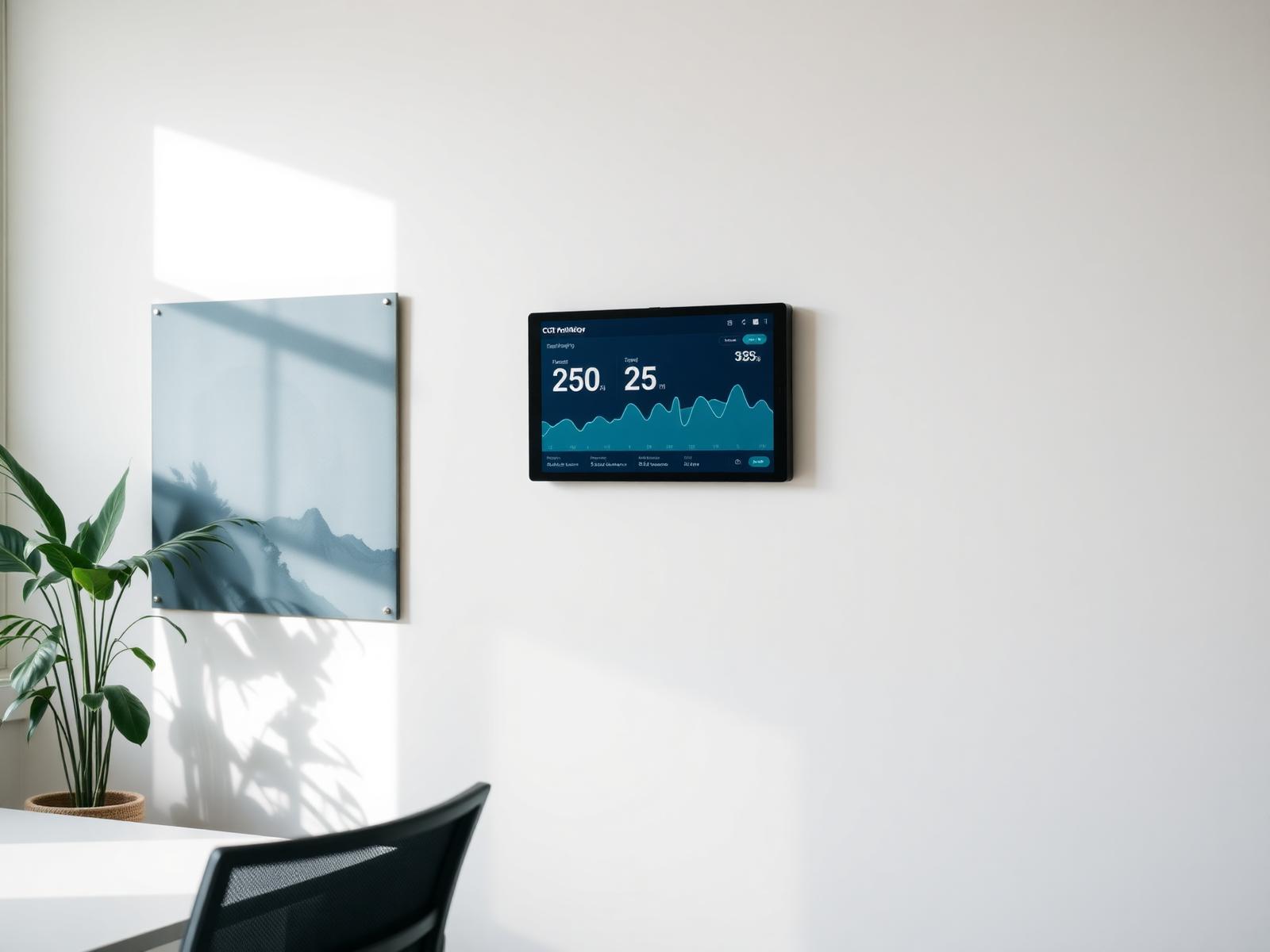
For tenanted offices without BMS access, we recommend a permanent fleet of networked CO₂ sensors with dashboards visible to FM. That puts ventilation back into the daily building operations rhythm and prevents the slow drift back into under-ventilation that follows every refurbishment.
For schools and healthcare we benchmark instead against BB101 and HTM 03-01. The principle is identical: measure what is delivered, compare against the right standard, fix the gap, verify the fix.
FAQ
Carbon dioxide monitoring — common questions
Suspect under-ventilation?
Book a 7-day continuous CO₂ monitoring deployment and get a definitive ventilation diagnosis. Call 01322 555566.
Request a CO₂ assessmentInvestigate SBS