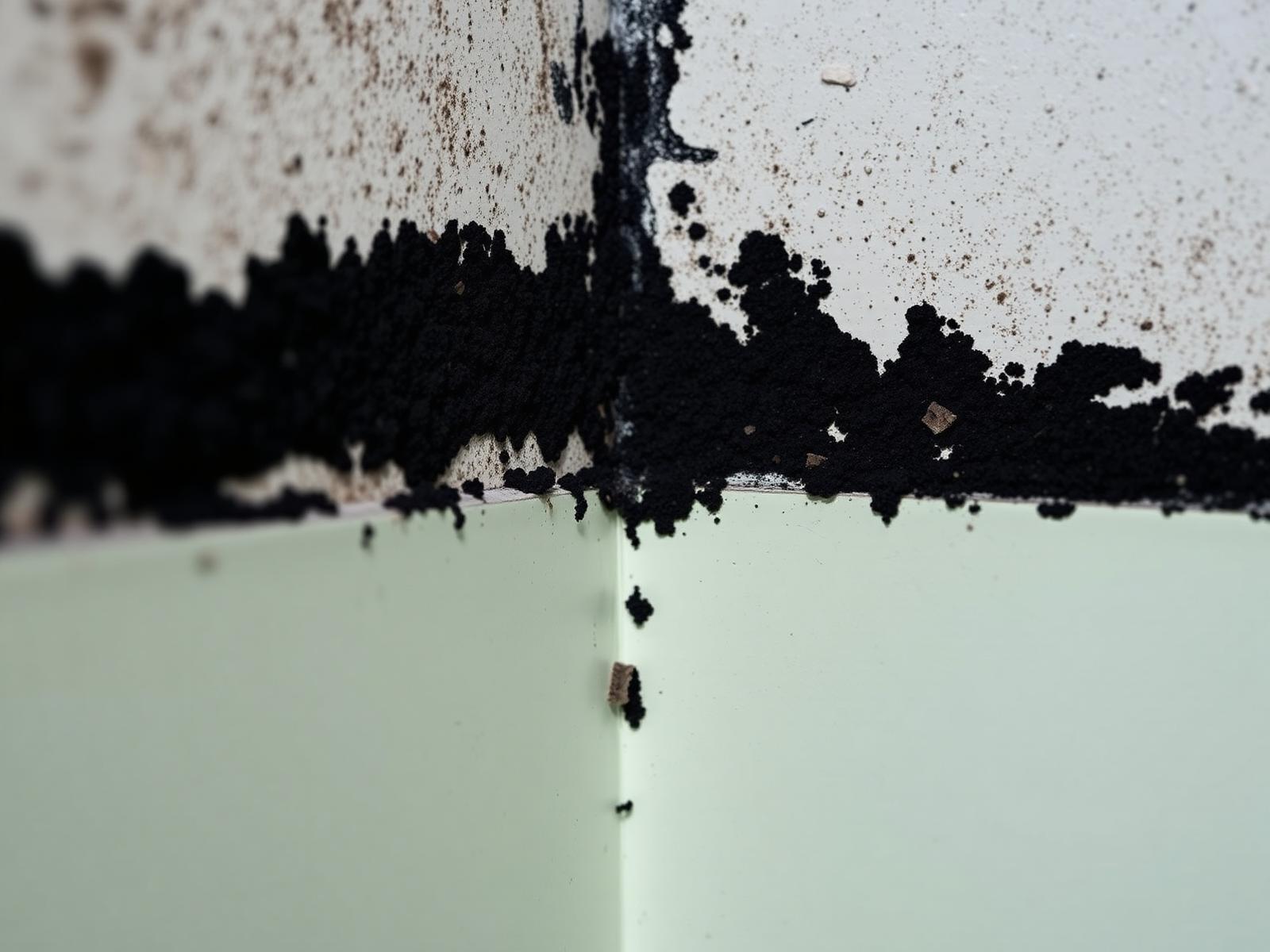
- Surface swab or tape lift — taken from a visible patch, sent to a lab. Confirms genus (Aspergillus, Cladosporium, Stachybotrys etc.) and whether the growth is active. Best for disputes and species-specific health questions.
- Airborne spore trap — a calibrated pump pulls room air through a sampling cassette for 5–10 minutes. The lab counts spores per cubic metre and compares against an outdoor control sample. This is the standard test for hidden mould behind plasterboard, under floors or in cavity walls.
- Humidity and temperature logging — a small data logger placed in the affected room for 7–14 days. Reveals the daily condensation risk that is causing the mould, which a one-off snapshot cannot.
01
The three tests that diagnose UK home mould
02
When testing is justified (and when it isn't)
Skip the test if the mould patch is small, visible, on a clear cold-surface or leak, and symptoms resolve once it is cleaned and the moisture source fixed.
Commission a test when health symptoms persist after cleaning, when the smell is musty but no patch is visible, when a tenant–landlord dispute is in progress, for an insurance disrepair claim, or when a vulnerable occupant (infant, asthmatic, immunocompromised) is involved.
03
UK law and guidance
- Homes (Fitness for Human Habitation) Act 2018 — landlords must keep rented homes free from damp and mould hazards.
- Awaab's Law / Social Housing (Regulation) Act 2023 — strict timeframes for social landlords to investigate and remedy damp and mould.
- UK Government guidance, Sept 2023 — damp and mould are a serious health risk; landlords must act, regardless of whether occupant lifestyle is a contributing factor.
- BS 5250:2021 — moisture management in buildings; the technical reference behind most surveyor reports.
04
What to do with the result
A positive test pointing to elevated spores or persistent humidity above 60% RH should drive (a) identification of the moisture source — leak, cold bridge, missing extract fan, blocked airbrick — (b) remediation by an appropriately qualified contractor, and (c) a re-test after 4–6 weeks to confirm levels have returned to outdoor-equivalent. See our mould air testing service for the full process.
05
Frequently asked questions
Do I need a mould test if I can already see the mould?
Visible mould on a small area (under ~1 m²) usually just needs cleaning and a fix to the moisture source — no test required. Testing is justified when the mould is hidden, when health symptoms persist after cleaning, when a landlord disputes the cause, or when an insurance or disrepair claim is in progress.
What's the difference between an air test and a surface swab?
A surface swab confirms whether a visible patch is mould and identifies the species. An air test (spore trap) measures airborne spore concentration in a room and compares it to outdoor levels — the standard evidence for hidden mould and for health symptom investigations.
What humidity level prevents mould in a UK home?
Keep relative humidity below 60% (ideally 40–55%). Mould germinates on surfaces that stay above 80% surface RH for extended periods, which often happens on cold corners and behind furniture even when the room air feels dry.
Is my landlord obliged to fix mould?
Under the Homes (Fitness for Human Habitation) Act 2018, a UK landlord must ensure the home is free from hazards including damp and mould throughout the tenancy. A documented mould test strengthens a complaint or Housing Ombudsman case.
Can mould make my family ill?
Yes. The Awaab Ishak inquest and subsequent UK government guidance (Sept 2023) confirm that prolonged exposure to damp and mould causes respiratory illness, especially in children, the elderly and people with asthma.