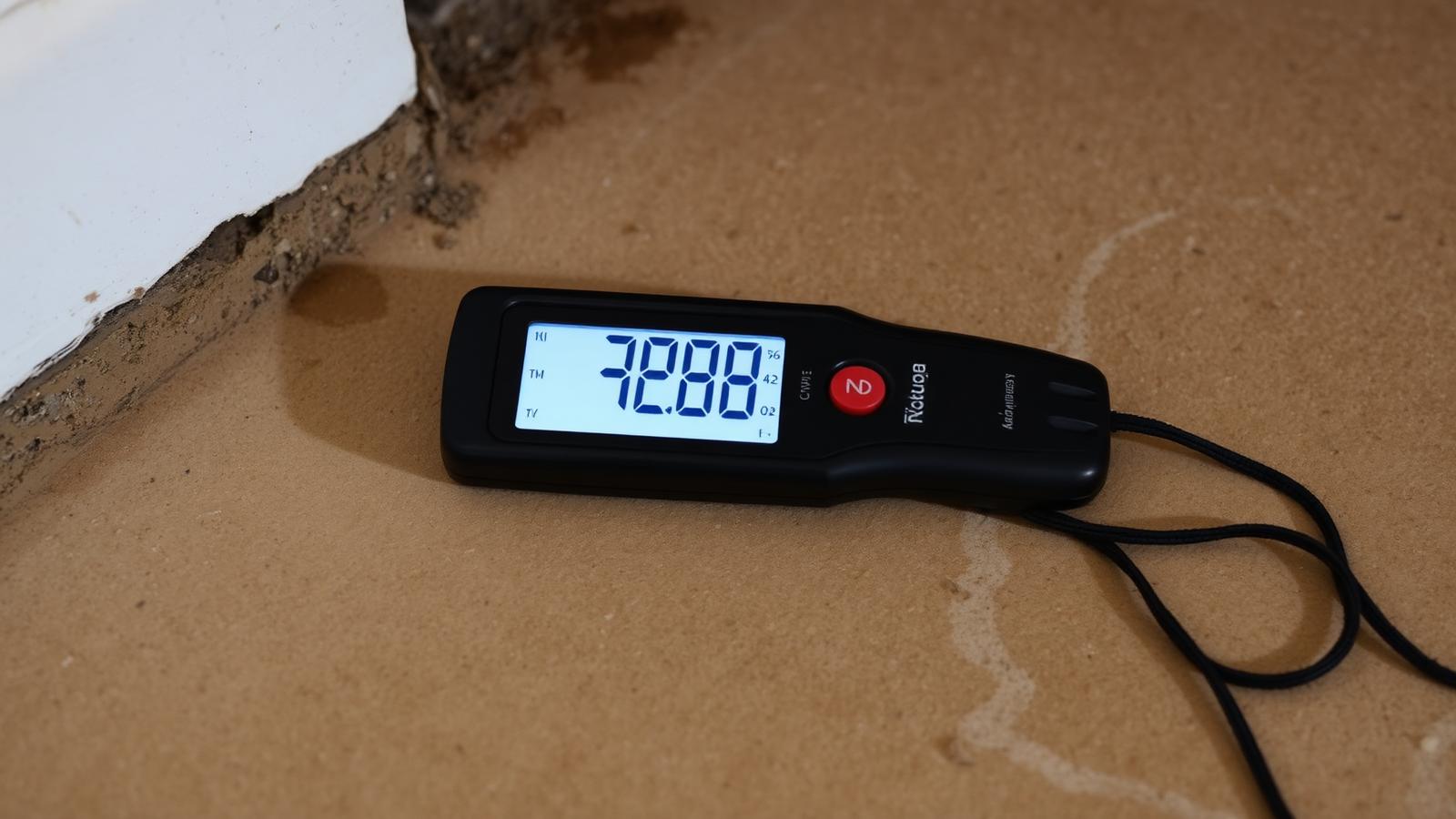
Radon decays from uranium in soil and rock, seeping into buildings through floors and service penetrations. It causes around 1100 UK lung-cancer deaths per year. Risk is highest in granite areas — Cornwall, Devon, Derbyshire and parts of Northamptonshire — but elevated levels appear sporadically nationwide.
01
What radon is and why it matters
02
Workplace duties under IRR17
Under the Ionising Radiations Regulations 2017, employers in UKHSA-defined Radon Affected Areas must assess workplace radon and act where levels exceed 300 Bq/m³. HSE enforcement is active in basement and ground-floor workspaces.
03
Testing and mitigation
Use UKHSA-validated alpha-track detectors over a 3-month deployment for a definitive household result. Where levels exceed action thresholds, mitigation typically uses a sub-floor depressurisation (sump) system — inexpensive and highly effective.