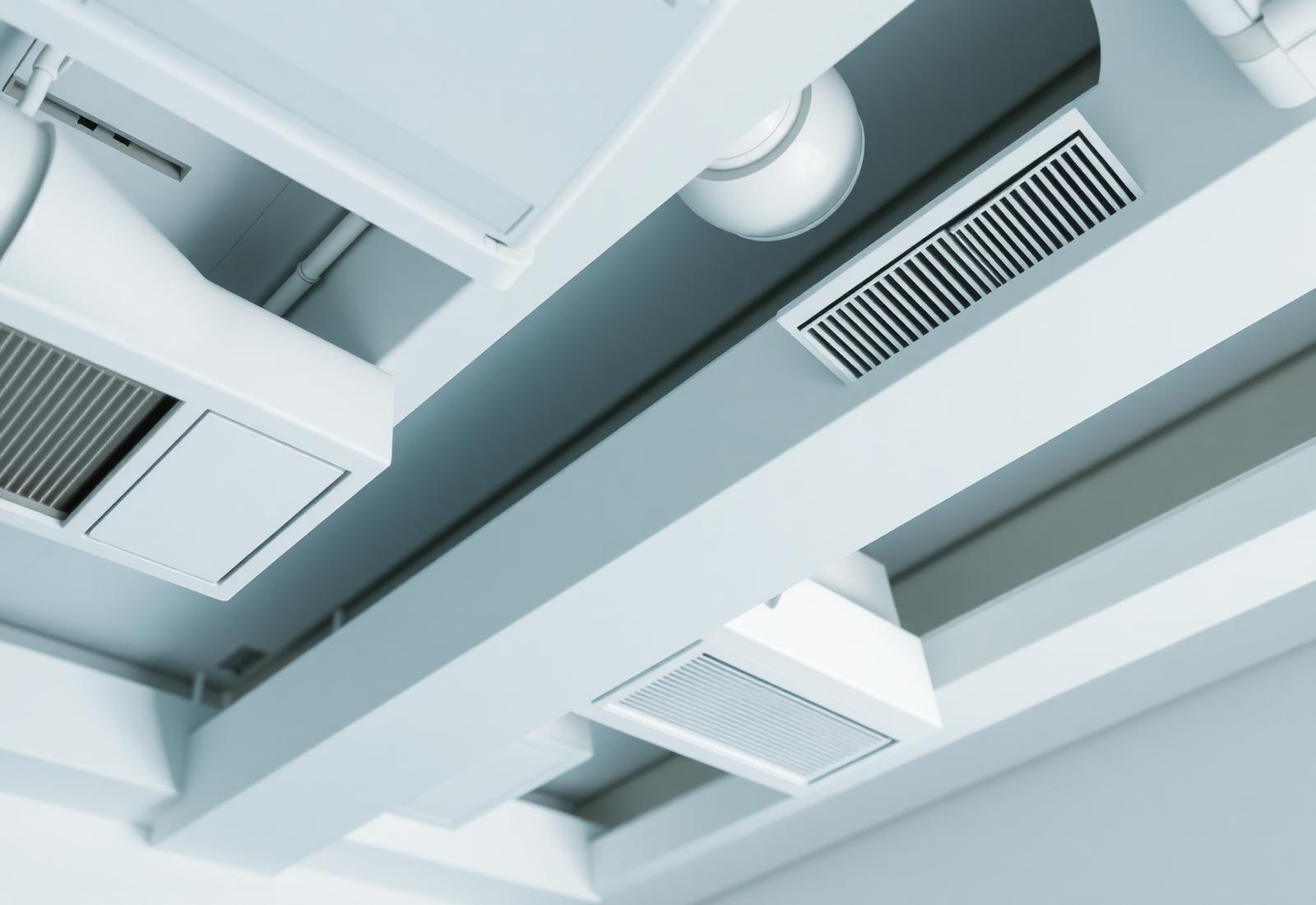
The Regulatory Reform (Fire Safety) Order 2005 makes the building's Responsible Person legally accountable for maintaining all fire safety equipment in working order. Fire and smoke dampers — the metal blades inside ductwork that close to maintain compartmentation in a fire — are explicitly covered. The technical method is set out in BS 9999:2017 and BESA TR19, with healthcare estates additionally under HTM 03-01.
01
The legal framework
02
How often: the testing schedule
BS 9999 sets annual drop testing as the baseline for most buildings. Spring-loaded curtain dampers, or any damper in a critical environment (hospitals, data centres, custodial estate), are tested every 6 months. New installations are commissioned and proved before handover, then enter the annual cycle. See our dedicated frequency guide →
03
What a drop test actually involves
- Locate every damper from the as-built drawings (and add any missing from the register)
- Access the damper via the inspection hatch — installing one if it has been built over
- Trigger the closure mechanism: manually release the fusible link or activate the electrical actuator
- Verify full closure and seal against the duct wall, photograph the result
- Reset the damper, prove the actuator on motorised units, replace any consumable fusible link
- Log pass/fail with photo, GPS-tagged location and contractor signature in the fire safety log
04
Who can sign off the test
The standard requires a "competent person". HSE and most insurers interpret this as a contractor with BESA Vent Hygiene Elite or equivalent training, current public liability cover, and demonstrable experience. In healthcare estates, the contractor must also meet HTM 03-01 Part B competence requirements.
05
Failure rates and remediation
First-time test failure rates of 20–35% are typical in buildings that have never had a programme — usually because dampers were painted over during refurbishment, lost their fusible link, or had ductwork added downstream that blocks the blade path. Remediation is sequenced: clear access, free the blade, replace consumables, retest within 30 days.
06
Frequently asked questions
Is fire damper testing a legal requirement in the UK?
Yes. The Regulatory Reform (Fire Safety) Order 2005 places a duty on the Responsible Person to ensure passive fire protection — including dampers — is suitably maintained. BS 9999 and BESA TR19 give the technical method (annual drop testing as a minimum).
How often do fire dampers need to be tested?
BS 9999 recommends annual drop testing. Spring-operated dampers in heavy-duty systems or critical infrastructure (healthcare HTM 03-01 environments) are commonly tested every 6 months.
Who can test fire dampers?
There is no licensing scheme, but the Responsible Person must demonstrate competence. In practice this means a contractor accredited to BESA Vent Hygiene Elite, IFE, or with documented BS 9999 / TR19 training and current insurance.
What is a fire damper drop test?
The damper is released — usually by activating the fusible link manually or by electrical trigger — and inspected to confirm it closes fully and seals against the airflow. It is then reset, the actuator is verified, and the test is logged with photographic evidence.
What happens if a fire damper fails the test?
It must be repaired, replaced or supplemented with a temporary compartmentation measure before the building can continue to operate safely. Failures are notifiable to the Responsible Person and recorded in the fire safety log book.